
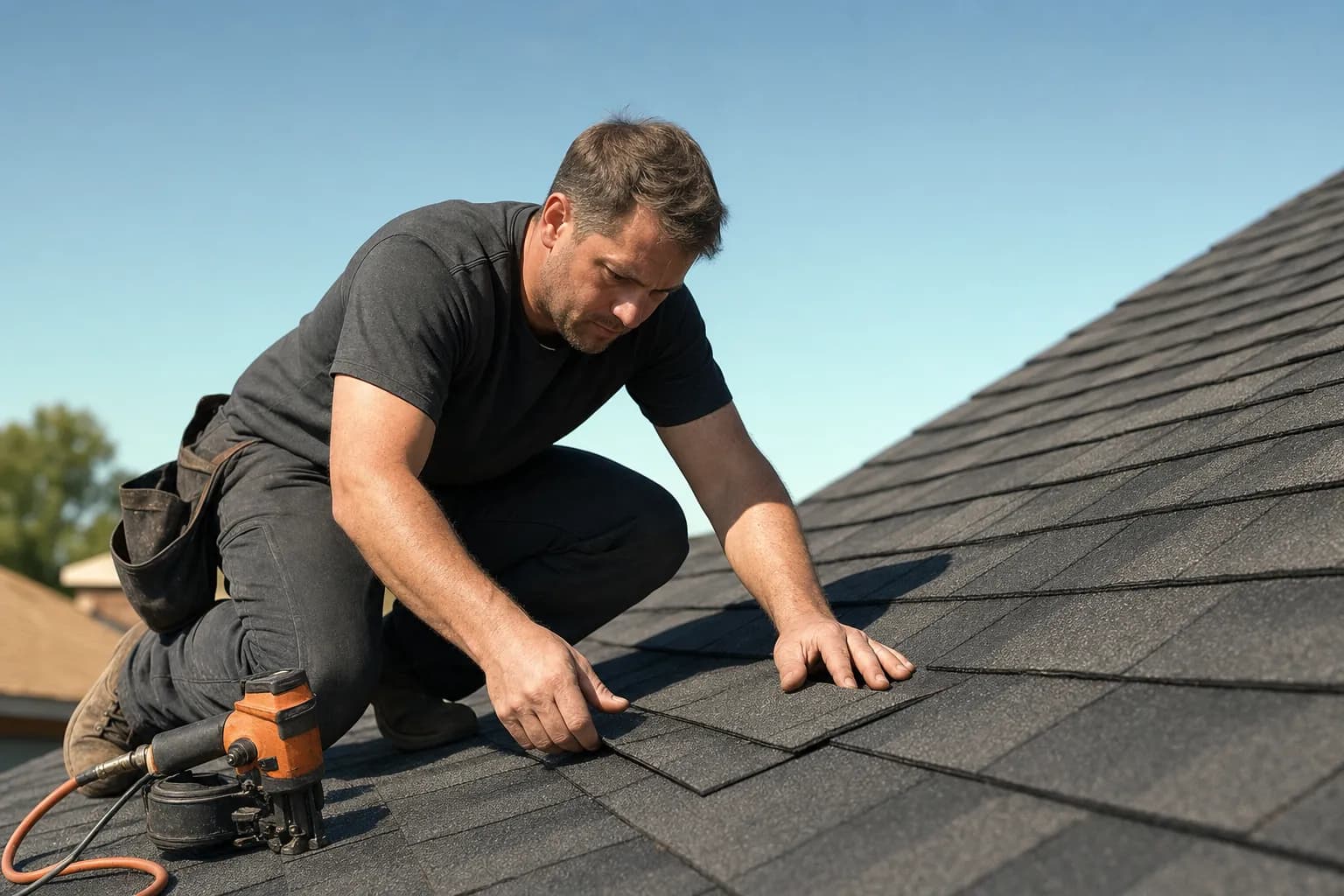
A hailstorm hits on a Wednesday. By Friday, out-of-state trucks are circling the neighborhood. By the following week, those companies are sitting in the Google map pack for "roofer near me" with freshly optimized profiles, and the local contractor who's been serving the area for 15 years is buried below them. That's roofing company marketing in 2026: a local trust problem played out on a search results page.
Roofing is one of the most storm-driven trades in home services. The NOAA billion-dollar disaster database tracked 203 billion-dollar severe storm events since 1980, with severe thunderstorms producing tornadoes, damaging winds, and large hail accounting for half of all billion-dollar disasters in the U.S. In 2024 alone, 17 of the 27 billion-dollar weather events were severe storms. Every one of those events triggers a wave of roofing demand, and with it, a wave of out-of-state competitors fighting for the same homeowners.
The U.S. roofing market is expected to grow from roughly $32.6 billion in 2025 to $34.6 billion in 2026. That's a lot of roof replacements, repairs, and inspections up for grabs. The question for local roofing companies isn't whether the work exists. It's whether the homeowner scrolling through the map pack sees your name or the storm chaser's name first.
This article is about the specific factors that determine who wins that map pack position: reviews, profile management, local signals, and the trust gap between a roofing company that's been here for years and one that showed up last week.
IN THIS ARTICLE
- 1Reviews decide the map pack faster than most roofing companies realize
- 2Out-of-state storm chasers can outrank the local company after a storm
- 3A Google Business Profile can get flagged right when storm season hits
- 4The map pack listing still has to earn the call once someone clicks it
Keep reading to understand what actually determines which roofing company a homeowner calls when they're staring at three options on their phone.
Reviews decide the map pack faster than most roofing companies realize
For roofing companies, reviews are the single most impactful map pack ranking factor outside of proximity. A roofer with 400 reviews and a 4.7 rating will consistently outrank a roofer with 50 reviews and a 5.0 rating in the same service area. Google's documentation on local ranking confirms that review count and score factor into local search ranking, and that responding to reviews signals that a business values its customers.
But roofing reviews have a unique challenge that plumbers and HVAC companies don't face to the same degree: the storm cycle. A hailstorm can generate 50 jobs in two weeks, which means 50 opportunities to collect reviews, but only if the system is in place before the storm hits. The roofing company with a review automation system running year-round enters storm season with momentum. The one that "hasn't gotten around to it" enters storm season at a disadvantage that widens with every passing day.
A review-bombing attack can look like a coordinated pattern within days
Roofing is one of the few trades where competitors actively sabotage each other's online reputations. After a major storm event, when map pack positioning directly translates to tens of thousands of dollars in booked work, some competitors resort to leaving or coordinating fake negative reviews on a rival's listing.
The pattern is identifiable:
- Multiple one-star reviews appearing within a short window (24 to 72 hours)
- Reviewers with no local history, no profile photos, and no other reviews
- Vague, non-specific complaints that don't reference actual work performed
- Reviews that appear after a storm event when map pack competition intensifies
Google does remove reviews that violate its policies, but the process is not instant. A coordinated attack can suppress your listing's visibility for days or weeks while the reviews sit there unaddressed. That's days of lost calls during the exact period when call volume is highest.
The defense is proactive. A roofing company with 400 legitimate reviews can absorb a handful of fake ones without a meaningful impact on the average rating or the homeowner's perception. A company with 30 reviews can be devastated by five fake one-stars. Volume is armor.
Report suspicious reviews through Google Business Profile immediately. Flag the specific policy violation (fake engagement, conflict of interest, or off-topic). Respond to each review professionally without engaging in a public argument. Document the pattern with screenshots and timestamps in case you need to escalate through Google's support channels.
Review velocity that stalls for months signals something to Google
A roofing company that collects 20 reviews in April and then zero for the next three months sends a signal. Not just to Google's algorithm, but to every homeowner who notices the gap. Recent reviews tell a prospective customer that the business is active, consistently serving clients, and maintaining quality. A stale review profile raises the question: are they still in business?
Consistency matters more than spikes. A roofing company generating 3 to 5 reviews per week, year-round, builds a review profile that dominates the map pack in any season. The system:
- 1Every completed job triggers an automated review request via text within one to two hours
- 2A follow-up email goes out at 24 hours for customers who haven't responded
- 3Office staff monitors incoming reviews and responds the same day
- 4The cadence continues through slow months, not just storm-driven peaks
During storm season, when job volume surges, the review velocity naturally accelerates. But the system has to be running before the storm. Setting up a review process after the hail hits is already too late, because the out-of-state competitors arrived with their systems already dialed in.
Shoulder months between storm events are when many roofing companies let review generation lapse. Maintenance work, inspections, gutter jobs, and small repairs all produce satisfied customers who can leave reviews. Those reviews sustain your velocity and keep your listing fresh while competitors go dormant.
Replying to a negative review still shapes how the next homeowner reads it
A one-star review from a frustrated customer is inevitable in roofing. Insurance disputes, timeline delays, and miscommunications happen even with the best contractors. What matters is the response, because the response is not for the reviewer. It's for the next 50 homeowners who read it.
A professional response should:
- Acknowledge the customer's frustration without being defensive
- Reference the specific issue briefly to show you're paying attention
- Offer to resolve the situation offline with a phone number or email
- Stay short and calm, never argue, never accuse, never explain at length
A roofing company that responds professionally to a negative review earns more trust than one with a perfect 5.0 and no responses at all. Homeowners comparing three roofers in the map pack notice how complaints are handled. The contractor who responds with empathy and accountability stands out against the one who ignores criticism entirely.
Out-of-state storm chasers can outrank the local company after a storm
Every established roofer knows the feeling. The storm hits, and within days, unfamiliar trucks are circling neighborhoods you've worked for years. Those trucks belong to companies that follow weather patterns across the country, set up temporary operations in the affected area, and aggressively compete for the surge of insurance-driven roof replacements.
The money at stake is staggering. The Insurance Information Institute reports that severe convective storms caused $51 billion in U.S. insured losses in 2025, the third consecutive year exceeding $50 billion. Hail alone accounts for as much as 80% of severe storm claims in a given year, with roofs bearing an estimated 70% to 90% of total insured residential catastrophic losses. That's the prize storm chasers are chasing, and they're increasingly sophisticated about how they capture it online.
The National Insurance Crime Bureau has documented the pattern: storm chasers arrive after major weather events, offer free inspections, push homeowners to sign contracts quickly, and in many cases leave behind substandard work and unenforceable warranties. Reported instances of contractor fraud increased 38% between 2023 and 2025. But the marketing threat is separate from the fraud threat. Even legitimate out-of-state companies with real crews and proper licensing can temporarily outrank a local roofer in the map pack if the local company isn't managing its profile actively.
National competitors show up in the map pack before locals refresh their listing
A storm chaser with a polished Google Business Profile strategy can register a Google listing in a new market, verify it quickly, and begin collecting reviews from the surge of jobs they complete in the first two weeks after a storm. If the local roofer hasn't touched their GBP in months, hasn't posted since last summer, and has a stale review profile, the storm chaser's fresh activity can push them down.
The map pack ranking factors that storm chasers exploit:
- Profile completeness: they arrive with fully optimized profiles, every category filled, every service listed
- Review velocity: they generate a burst of reviews from the initial wave of storm jobs
- Posting activity: they post photos from local job sites immediately, creating fresh, geo-tagged content
- Responsiveness: they answer every call and message instantly because storm season is their entire business model
Local roofing companies counter this by maintaining their profiles year-round, not just during storm events. A listing that's been active for 12 months with consistent reviews, weekly posts, and complete information has a foundation that a two-week-old listing can't easily displace.
The strongest defense is a year-round Google Business Profile management strategy. Weekly posts, even during slow months. Review generation after every job, not just storm jobs. Photos uploaded from every project. Service categories and descriptions kept current. That sustained activity builds a profile that Google trusts more than a new one, regardless of how aggressively the new one is managed.
A one-time storm spike in searches fades before the job pipeline follows
After a major hail event, search volume for "roofer near me" can spike 500% or more in the affected area. That spike drives a frenzy of competition for map pack visibility. But the spike is temporary. Within two to four weeks, search volume normalizes as the initial wave of inspections and claims settles.
The mistake storm chasers make, and the advantage local companies have, is the long tail. A roof replacement negotiated through insurance often takes 30 to 90 days from claim to contract. The homeowner who searched "roofer near me" the week after the storm might not sign a contract until two months later. By then, the storm chaser has moved to the next market. The local roofer who maintained contact, followed up professionally, and remained visible in local search is the one who books the job.
This timeline favors roofing companies that think in seasons, not spikes. Your content, your SEO, your ad presence, and your GBP activity should be building visibility months before the next storm event, not scrambling to catch up after it.
Local reviews mentioning specific neighborhoods carry more weight than volume
A storm chaser might collect 20 reviews in two weeks, all with generic praise like "great job, fast service." A local roofer with reviews that mention specific neighborhoods, streets, and local details carries a different kind of authority.
"They replaced our roof on Oak Hill Drive after the April hailstorm. The crew showed up on time, cleaned everything up, and the insurance process was smooth." That review tells Google and the next homeowner several things at once:
- The business serves a specific local area
- The reviewer had a real, verifiable experience
- The work was tied to a recognizable local event
Reviews with geographic specificity reinforce the local relevance signal that Google uses in map pack ranking. A hundred generic reviews from across three states don't carry the same local weight as 50 detailed reviews from homeowners in your service area.
Encourage your customers to be specific in their reviews. Don't script them, but when your tech asks for a review on site, a simple "it really helps if you mention the neighborhood or the type of work" nudges the customer toward a more valuable review without crossing the line into incentivization.
A Google Business Profile can get flagged right when storm season hits
Google's spam detection systems for business profiles are aggressive, and roofing companies trip the filters more often than most trades. The combination of storm-driven geographic expansion, high-volume review collection, and competitive reporting makes roofing GBP management riskier than it looks on the surface.
A suspension during storm season can cost a roofing company thousands of dollars in lost visibility at the worst possible moment.
Expanding into new zip codes too quickly can trigger a spam filter
After a storm event hits a neighboring county, a roofing company might expand their service area in Google Business Profile to include the affected zip codes. If the expansion is sudden, covers a large geographic area, and coincides with a surge in storm-related search activity, Google's automated systems may flag the profile for suspicious behavior.
The flags that trigger scrutiny include:
- Adding 20 or more zip codes to a service area at once
- Expanding into cities or counties far from your verified business address
- Changing the service area right when storm-related searches spike in that area
- Multiple profile changes made in a short window (service area, categories, business description all at once)
The safer approach is to expand your service area gradually over time, ideally before storm season. If you serve five counties year-round, your profile should already reflect that. Adding storm-affected areas reactively is the pattern that triggers filters.
If you legitimately serve a wide area, make sure your profile reflects that reality during calm periods when Google is less likely to scrutinize rapid changes.
Mismatched addresses across directories give Google a reason to suspend a listing
Google cross-references your business information across the web. If your GBP shows one address, your website shows another, and a directory listing shows a third, that inconsistency gives Google a reason to question your legitimacy.
For roofing companies, this often happens because:
- 1The business moved and some directories still show the old address
- 2A PO box or virtual office was used for the GBP, which violates Google's policies
- 3Different team members updated different platforms at different times
- 4A third-party listing service created duplicate or inaccurate entries
A NAP audit, verifying that your name, address, and phone number are identical across your GBP, your website, Yelp, BBB, Angi, Facebook, and every other directory, should happen quarterly at minimum. During storm season, when competitors may report your listing for inconsistencies, having clean data across the web is a defensive measure as much as a ranking one.
The FTC requires that advertising claims be truthful and substantiated, a standard that extends to your business listings. Inconsistent information across platforms isn't just a ranking risk. It's a trust signal that Google, consumers, and competitors can all see.
A profile locked during peak season can erase weeks of ranking work
If Google suspends your profile, your listing disappears from the map pack entirely. During a normal week, that's a problem. During peak storm season, it's a disaster. Every day without a listing is a day your competitors are absorbing your call volume.
Reinstatement can take anywhere from a few days to several weeks depending on the reason for the suspension and the quality of your appeal. Steps to minimize risk:
- Verify all profile information is accurate and consistent before storm season starts
- Avoid making multiple profile changes simultaneously
- Monitor your profile weekly for unauthorized edits (competitors or automated systems can suggest changes that alter your listing)
- Keep documentation of your business license, address verification, and insurance readily available for reinstatement appeals
- Set up Google Business Profile alerts so you're notified of any changes or issues immediately
Prevention is significantly cheaper than recovery. A roofing company that maintains a clean, stable profile year-round is far less likely to face suspension than one that makes aggressive changes during peak competition.
The map pack listing still has to earn the call once someone clicks it
Winning a map pack position is step one. Converting that position into a phone call is step two. A homeowner looking at three roofing companies in the map pack is making a snap judgment based on what they see before they ever visit a website or pick up a phone. Your listing needs to earn the tap.
Photos of finished roofs build more trust than stock images ever will
A Google Business Profile listing with 15 stock photos of generic rooftops tells the homeowner nothing about your company. A listing with 100 photos of actual completed jobs, crew members on site, before-and-after damage comparisons, and equipment in action tells them everything.
What to upload consistently:
- Completed roof installations with the house visible (demonstrates finished quality)
- Before-and-after pairs showing storm damage and the repair
- Crew photos on the job site (faces build trust faster than logos)
- Equipment and truck photos (signals a professional, equipped operation)
- Interior shots of clean workspaces after a job (shows you respect the property)
Upload new photos after every project. Google timestamps photo uploads, and a profile with photos added this week ranks better and converts better than one whose most recent photo is from last year. During storm season, you might be uploading daily. During shoulder months, aim for weekly.
Homeowners scrolling through three map pack listings will spend a few seconds on photos before deciding who to call. Real photos of real roofs in their local area are a stronger conversion signal than any ad copy or promotional banner.
A handful of local backlinks can outweigh a stack of blog posts
The prominence factor in Google's local ranking algorithm is influenced by your business's overall web presence. For roofing companies, local backlinks, links from other reputable websites in your area, are one of the most effective ways to build prominence without producing massive volumes of content.
The highest-value backlink sources for a local roofer:
- 1Your local chamber of commerce or business association
- 2Supplier and manufacturer directories (GAF, Owens Corning, CertainTeed contractor locators)
- 3Local news coverage from storm events (provide expert quotes to local reporters)
- 4Sponsorships of local sports teams, community events, or charities
- 5Partnerships with complementary contractors (the siding company, the gutter installer, the insurance restoration firm)
Each of these links tells Google that a real, trusted entity in your community recognizes your business. Five links from local, authoritative sources move the needle on local ranking more than 50 links from random national directories.
Manufacturer certifications deserve special mention. A GAF Master Elite certification or an Owens Corning Preferred Contractor listing often includes a backlink from a high-authority domain. That link carries weight for both map pack ranking and organic visibility.
Homeowners comparing three roofers decide before the phone even rings
When a homeowner sees three roofing companies in the map pack, they're comparing simultaneously. The decision factors, in the order most homeowners process them:
- Star rating and review count (the first thing they see)
- Most recent reviews (are they from this month or last year?)
- Photos (real jobs or stock images?)
- Business description and services listed
- Hours and response time indicators
- Website link (if they tap through, does the site confirm the trust the listing built?)
The roofing company that wins this comparison is the one with the strongest combination of fresh reviews, real photos, complete profile information, and a website that loads fast and puts a phone number in front of the visitor immediately.
This is why map pack marketing for roofers isn't just about ranking. It's about converting the position into a call. A company can rank in the top three and still lose the job to the second or third listing if their profile looks neglected or their website doesn't close the deal.
Service Scalers offers a free GBP audit built specifically for home service businesses. It shows you how your Google Business Profile stacks up against local competitors, where your review strategy is falling short, and what changes would make the biggest impact on your map pack visibility. No commitment. Just a clear look at what's working and what's costing you calls.
Conclusion
Roofing company marketing in 2026 is a local trust fight, and the map pack is where it's won or lost. The roofing companies dominating their markets aren't the ones with the biggest ad budgets or the flashiest websites. They're the ones with 400 reviews and climbing, a Google Business Profile that's been actively managed for years, real job photos uploaded weekly, and a listing that earns the tap every time a homeowner compares three options on their screen.
The storm chasers will keep showing up. They'll keep optimizing aggressively, collecting burst reviews, and competing for the same calls. But they can't replicate 15 years of local reviews, a web presence rooted in the community, and the trust that comes from a contractor who will still be answering the phone next spring. That's the moat. Building it is the work.
If you're ready to turn your online presence into the kind of local authority that storm chasers can't touch, reach out to Service Scalers. We work exclusively with home service businesses, and everything we build is measured against one number: booked jobs.